
Getting lost is a universal headache. A GPS signal can easily drop out in a parking garage, at sea, during a storm, or anywhere concrete and weather get in the way. But for an autonomous vehicle or a spacecraft landing on a planet, losing track of location isn’t just an inconvenience; it’s a catastrophic risk.
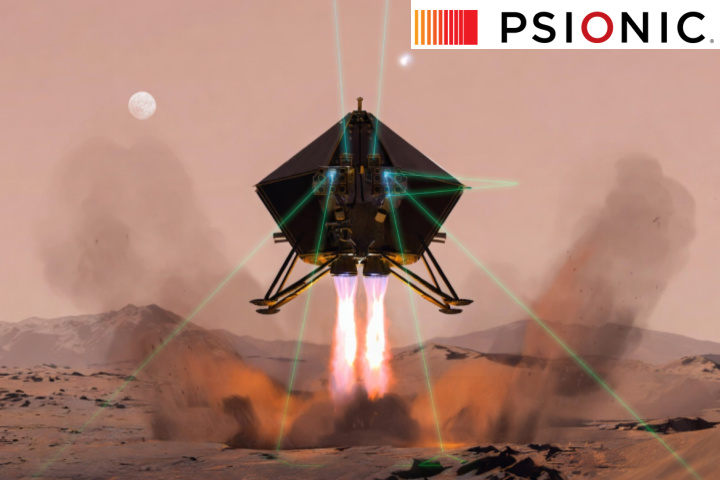
In Hampton, a team of former NASA Langley engineers set out to solve that problem. Steve Sandford, who previously tracked advanced technologies as an engineering director at Langley, founded Psionic in 2016 to license a NASA breakthrough: Navigation Doppler Lidar. Rather than relying on fragile satellite signals or traditional radar, the system fires laser beams at the ground and measures the returning light, giving vehicles instantaneous, pinpoint accuracy on speed and distance. Supported by a Space Act Agreement, Psionic stayed plugged into Langley’s testing facilities and top minds, while NASA fueled the commercial rollout through its SBIR program and Tipping Point initiative.
A challenge still remained: A license is not a product, so Psionic still had to shrink the sensor to a size small enough and tough enough for space flight. In 2021, the company licensed a second NASA system, Goddard’s Kodiak 3D lidar, for rendezvous and proximity work. A NASA-built Navigation Doppler Lidar flew on Intuitive Machines’ first commercial lunar landing in 2024, and Psionic’s own hardware has since followed on Commercial Lunar Payload Service missions.
On September 29, 2026, Intuitive Machines selected Psionic’s Space Navigation Doppler Lidar-Lander as the primary velocity and range sensor on its next four Nova-C missions. Psionic says this will place its technology on more than 60 percent of CLPS customers awarded so far. According to Psionic, these sensors have an accuracy of better than 2 centimeters per second on velocity and better than a meter on range, which is the difference between landing in a region and landing next to a specific target.
A week later, on October 6, Psionic announced AS9100 certification, the quality bar aerospace and defense customers look for in a sensor to be the same unit, every mission. Sandford called the certification an important milestone as Psionic grows from an innovative technology company into a scaled aerospace and defense manufacturer.
Over years of work and small wins, Psionic has grown on each win to create either another more advanced sensor or pursue a new opportunity for their sensors to be used. It split one sensor into two markets: PSNDL for space, SurePath for defense, aviation, and anywhere else a GPS cannot be trusted.
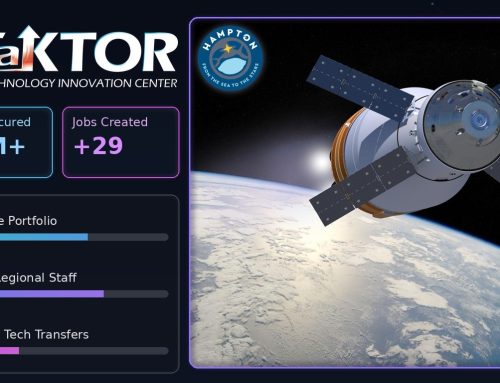
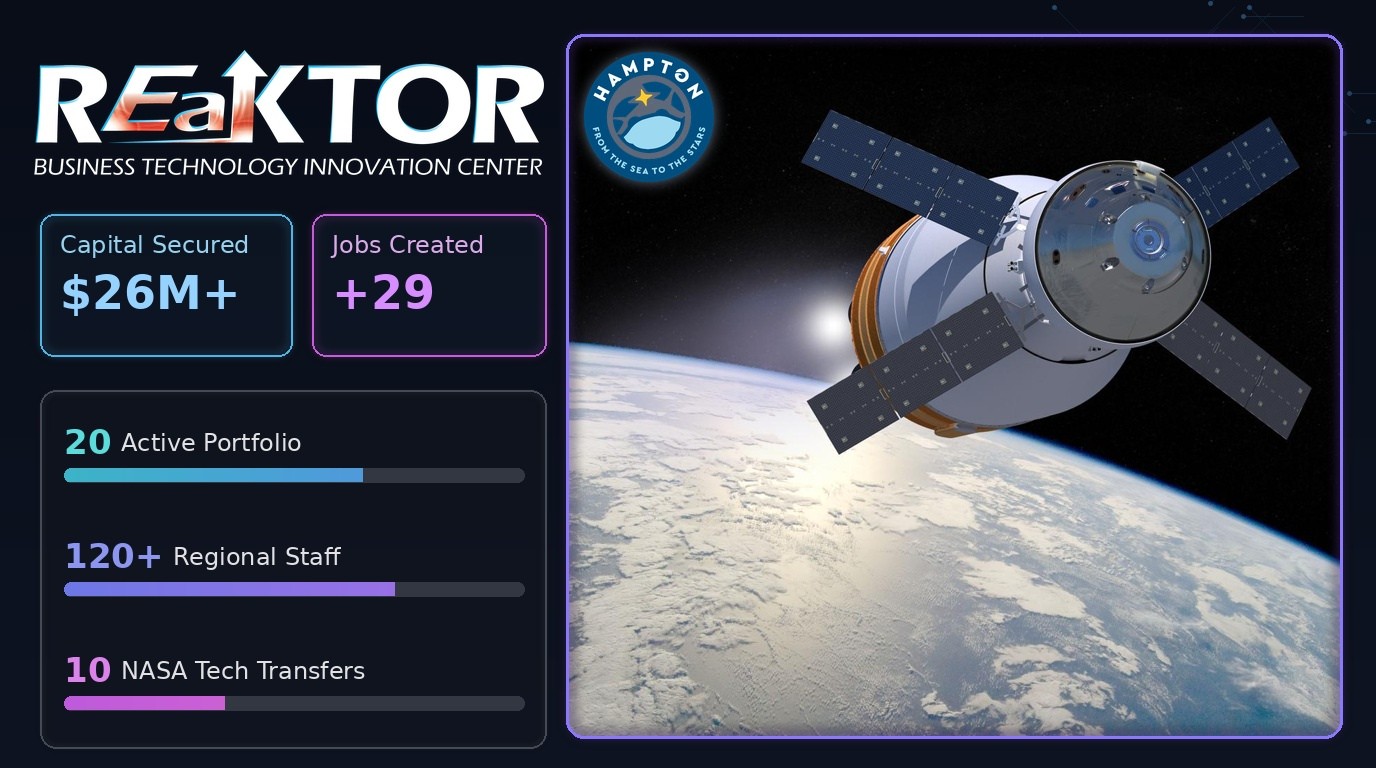
For much of Psionic’s journey, they have been part of the REaKTOR Innovation Center in Hampton. Innovate Hampton Roads runs the center for the City of Hampton as a space for companies like Psionic to create, test, and bring these advanced technical ideas to the market, while also introducing them to the innovative business ecosystem the region has. REaKTOR offers the space for the unglamorous years, where companies can have lab and office space, access to help with grants, fundraising, and a path to Langley.
REaKTOR is one piece of a larger business ecosystem that Innovate Hampton Roads is creating, where there are programs for the person who still only has an idea, to the company raising capital. Not every company is building the next sensor going deep into space, but the ecosystem creates a place for the long version of the work to grow, and a way for it to be around Hampton Roads while it gains traction.