By Josiah Kowles
REaKTOR portfolio company, VIAT Services, led by renowned neuroscientist Prof. Maria Kozhevnikov, recently showcased a breakthrough that is closing this gap in cognitive research, demonstrating that creative visualization can be scientifically evaluated and mapped.
Until now, and for generations, the cognitive mechanics of an artist’s mind were treated as a mysterious, subjective space that scientific measurement could not reach. While traditional psychometric testing could evaluate an engineer’s spatial reasoning or a pilot’s manipulation of three-dimensional forms, art schools lacked objective tools to assess how visual artists imagine color, shape, and surface texture.
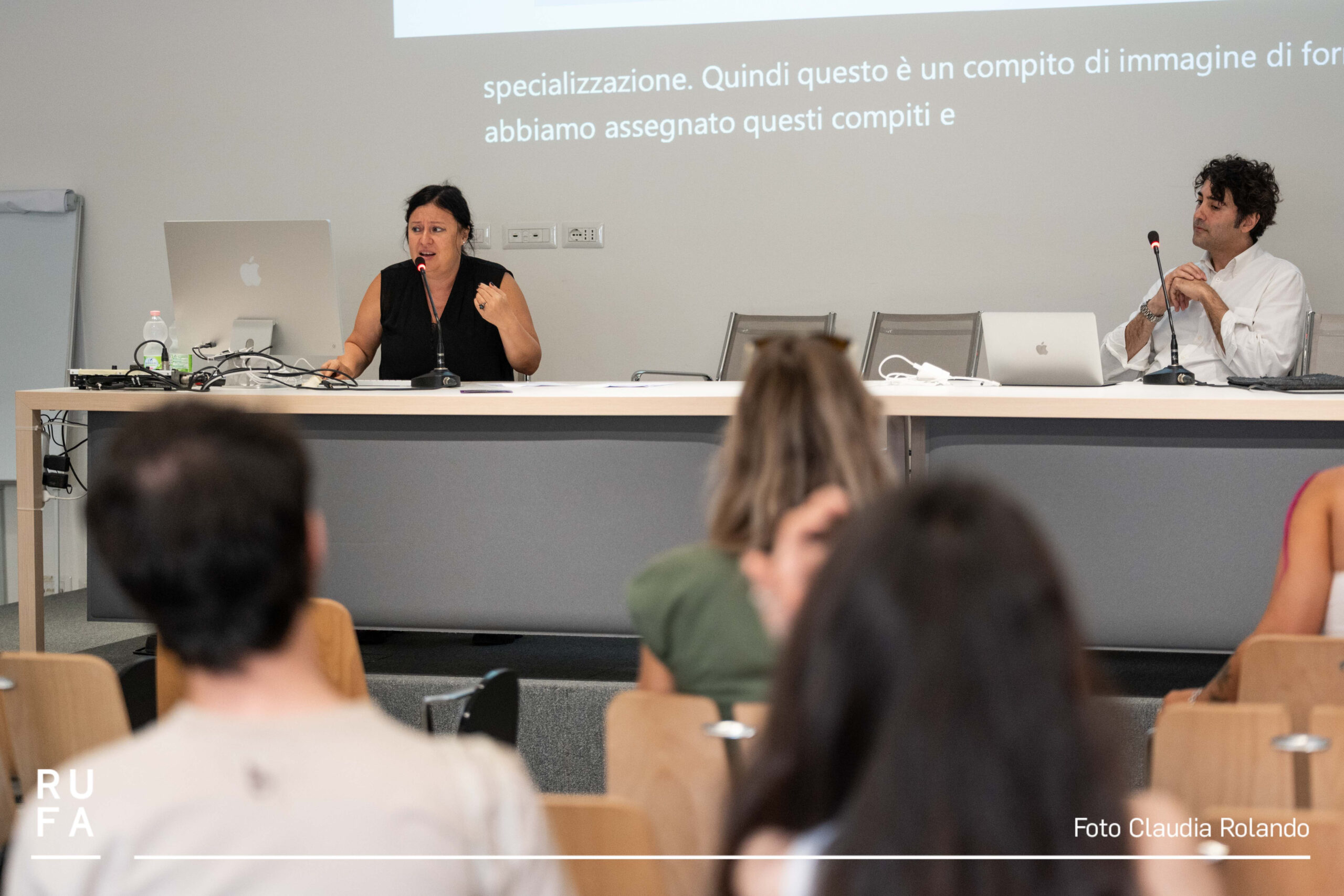
Prof. Maria Kozhevnikov, who holds faculty appointments at the National University of Singapore and Harvard Medical School, presented her research during an international seminar at the Rome University of Fine Arts. The presentation, titled How Artists Create: The Hidden Structure of Visual Imagination, showed the results of an extensive year-long validation study involving 525 undergraduate and graduate students across more than 15 fine art specializations. The study utilized VIAT Services’ new assessment suite, a diagnostic platform designed specifically to measure cognitive abilities central to the visual arts rather than standard STEM spatial skills. The data revealed that visual imagination is not a uniform trait, but a structured network of cognitive abilities that correlate with specific artistic disciplines.
Researchers found that different creative fields depend on specific cognitive profiles. Shape visualization proved crucial for students in sculpture and cinema. The synthesis of color and shape processing predicted success in abstract painting and animation, and texture visualization emerged as a primary driver in visual innovation design.
Recognizing the practical value of these insights, the Rome University of Fine Arts officially purchased a one-year institutional license for VIAT Services’ assessment suite following the study. The academy now integrates the technology into its prospective student interviews and orientation workflows, using objective cognitive data to help aspiring artists identify specializations that best match their natural strengths.
The transition of VIAT Services’ technology from an academic validation trial into a commercial product shows the vital support network required for deep-tech ventures to succeed. Building neuroscience assessment tools and adapting them for adoption requires a balance of scientific work, a commercialization strategy, and operational guidance.
As a portfolio company of the REaKTOR Technology Innovation Center in Hampton, Virginia, VIAT Services leverages an ecosystem that is designed around deep-tech researchers and innovation. REaKTOR closes the critical gap between research and market execution by providing founders with hands-on business mentorship, guidance on grant funding, access to private venture networks, and office space with lab infrastructure.
By offering this foundation to founders who need to validate, commercialize, and scale their new technologies, deep-tech startups like VIAT Services can translate cutting-edge scientific discoveries into market-ready solutions.