At a time when technology is evolving at breakneck speed, REaKTOR portfolio company HerculE‑Q is stepping forward with a bold, new vision: secure, wireless power/charging and trust for the machines of tomorrow.
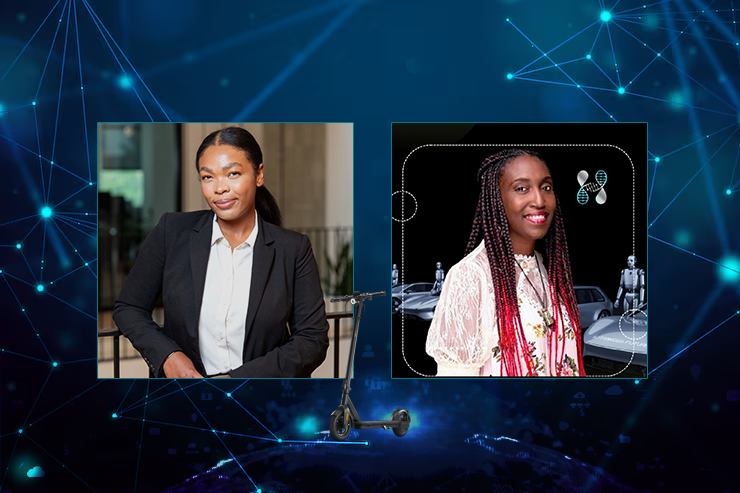
Teaming with Pompano, Florida-based Helixis Technology Corp, HerculE‑Q has announced a strategic collaboration dubbed Power Arc to integrate Helixis’ authentication software with HerculE-Q’s wireless charging stations.
Together, the two startups aim to tackle two major challenges in mobility and autonomy: fragmented access to charging for micro-transportation vehicles and the lack of standardized governance or trusted verification for charging technologies.
In a world where AI serves as a potential new threat to public-facing networks, security is no longer optional; it’s become foundational.
HerculE-Q’s wireless micro-transportation charging platforms (think: e-bikes and e-scooters) are designed to power battery-operated vehicles with convenience and scale, while Helixis brings its proprietary authentication system (the embedded Cygyl⁹™ trust module and Loom protocol layer) to support real-time and offline verification of the vehicles that HerculE-Q’s wireless technologies charge.
By combining these capabilities under the Power Arc system, the companies are creating what amounts to a trust-infused infrastructure: wireless charging stations that not only deliver energy but also ensure that the vehicles using them are verified, authorized, and secured.
Reliable charging access is becoming a bottleneck for micro-mobility, autonomous logistics, and smart-city deployments.
A unified system like Power Arc addresses this fragmentation. With advanced AI systems operating in public or semi-public spaces, new risk vectors are being introduced every day. Without verification systems, identity and safety become vulnerabilities that threaten the safety of the riders of these vehicles.
Diving a bit deeper reveals important social implications for the venture as well. Both Helixis and HerculE-Q are women-led technology companies, run by founders Twyla Jackson and Hannah LaCon, respectively. With women founders statistically underrepresented in STEM and technology leadership, and global data showing women hold only about 28% of the STEM workforce roles, the Power Arc collaboration delivers a powerful counter-narrative.
Based here in the City of Hampton and connected to the REaKTOR and NASA Tech Transfer University programs, groundbreaking companies like HerculE-Q exemplify the region’s commitment to supporting deep-tech ventures with real-world impact.
These startups are not just building products; they’re building new frontiers that will make our world more secure, equitable, and accessible than those that existed before them.